Decoding immunological landscapes
The Department of Immunodynamics investigates the spatial immune mechanisms in infections and cancer. By integrating mass spectrometry with our MOSAIC facility, advanced microscopy, and computational bioinformatics, we map immune cell behavior within complex tissue microenvironments at molecular resolution. Through multimodal imaging and interdisciplinary data integration, we decode immunological landscapes of spatial immunological mechanisms and enable next-generation therapeutic strategies.
Interstitial Dynamics of Neutrophils
Neutrophils are continuously generated in the bone marrow and released into the circulation, from where they rapidly migrate to sites of infection. There, they play a central role in driving inflammation and mediating antimicrobial defense. However, the mechanisms that regulate their interstitial migration and functional activity within infected organs remain incompletely understood.
We apply state-of-the-art imaging approaches to investigate how tissue-resident macrophages—forming dense networks of sentinel cells—coordinate and regulate neutrophil migration and function within inflamed tissues.
Immune Landscapes in the Spleen
The spleen is a central hub of systemic immunity, orchestrating rapid responses to blood-borne pathogens while maintaining immune homeostasis. We investigate how distinct microanatomical niches coordinate leukocyte positioning, activation, and differentiation during infection and inflammation. By spatial imaging, we map the dynamic cellular networks that shape immune responses within splenic compartments, aiming to uncover how spatial organization within the spleen governs protective immunity.

Macrophages
Resident and inflammatory macrophages
Regulation of Immunology
Induction of immunity
Regulation of Immunology
Induction of immunity

Neutrophils
Recruitment from the circulation
Interstitial migration
Crossing of barriers in Immunology
Interstitial migration
Crossing of barriers in Immunology
Immunology
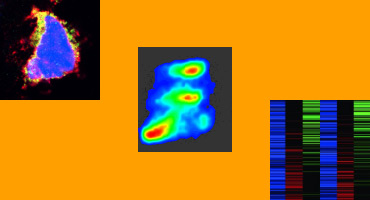
Cutting edge microscopy
Computational analysis in Immunology Proteomics and MALDI Imaging
Computational analysis in Immunology Proteomics and MALDI Imaging